Stakeholders from government, civil society, media, and international agencies have renewed the call for collective action to eliminate Female Genital Mutilation (FGM) in Ondo State and Nigeria at large, setting 2030 as the critical target year.
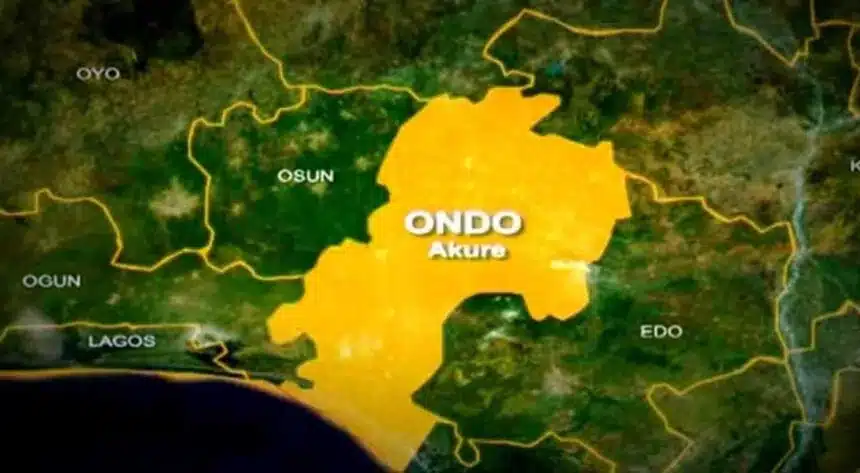
The call was made in Akure during a one-day workshop organised by Balm in Gilead Foundation for Sustainable Development (BIGIF), in partnership with the United Nations Children’s Fund (UNICEF), Movement for Good to End FGM, and the Ondo State Ministry of Women Affairs.
Speaking at the event, Mr. Nelson Akerele, Programme Manager of BIGIF, explained that the workshop was convened to foster stronger collaboration among stakeholders, particularly government institutions, towards ending the practice in Ondo State.
According to him, “The essence of this workshop is to build a common framework that accelerates action against FGM.
“We are focusing on strengthening capacities, especially in upholding survivor-centered principles, ethical reporting, and community engagement. This is how we can sustain momentum towards ending FGM by 2030.”
Akerele stressed that the practice, which persists in some communities due to cultural beliefs, continues to harm girls and women physically, psychologically, and socially.
He noted that progress can only be achieved if state and non-state actors work hand in hand to tackle root causes.
The BIGIF, a woman- and youth-led nongovernmental organisation, continues to lead grassroots advocacy against FGM in Ondo and beyond. The organization focuses on enhancing healthy living and promoting the rights of women, children, and young people.
With the 2030 target looming, BIGIF and its partners stressed that now is the time for accelerated, coordinated, and sustained action across communities, institutions, and sectors.
“Ending FGM is not just a goal—it is a duty we owe to the next generation of girls,” Akerele said, closing the session.
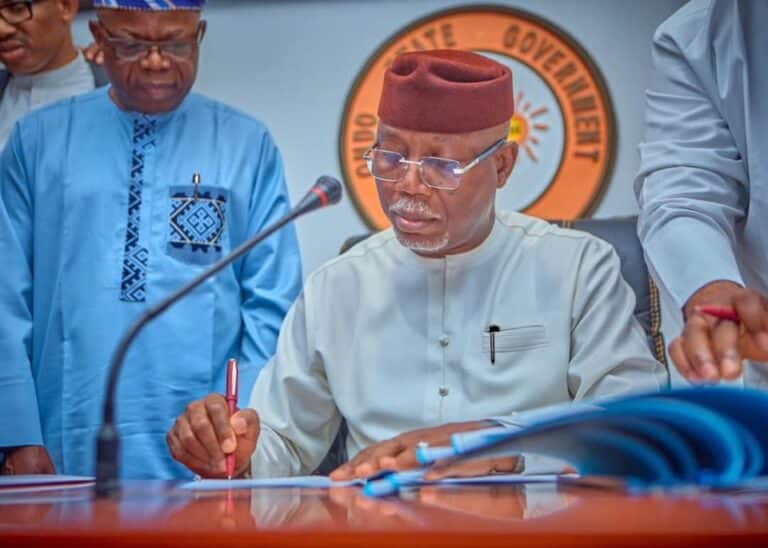
Representing the state government, Olufunmilayo Adejumo, Permanent Secretary of the Ministry of Justice, reaffirmed Ondo state’s zero tolerance for FGM, citing the Violence Against Persons (Prohibition) Law, which has been domesticated in the state.
Adejumo declared that “Female genital mutilation is violence against persons, pure and simple.It is prohibited under our laws, and perpetrators will be prosecuted.
“We encourage people to report offenders to the nearest health authority for verification, before handing them over to law enforcement.”
She explained that most cases occur during infancy, often carried out by parents or relatives, with devastating consequences that become apparent in adulthood.
“When a child grows up and realizes she has lost sexual feelings, it becomes a lifelong scar. That is why the state government continues to visit churches, mosques, and communities to educate our people, so that this harmful practice can be rooted out,
The UNICEF’s Nigeria Country Representative, Godwin Dalu, underscored the need for prevention-focused interventions, especially at the grassroots can guarantee the elimination of FGM by 2030, saying the fight against FGM must prioritise prevention, with communities at the heart of all interventions
He called on states to strengthen partnerships with ministries of women affairs and local government councils to ensure grassroots communities are fully engaged.
“Whatever we are doing towards accelerating action, let’s ensure it targets prevention. Elimination of FGM will not be achieved by laws alone. It requires community dialogue, awareness, and ownership of the campaign at the local level,”
According to UNICEF, Nigeria has one of the highest burdens of FGM globally, with millions of women and girls affected. Ondo State, despite recorded progress, remains one of the states where cultural and traditional practices sustain the act.
FGM is internationally recognised as a violation of human rights and has no health benefits. Instead, it is associated with severe pain, infections, complications during childbirth, and long-term consequences including sexual dysfunction and trauma.
One of the key sessions of the workshop was led by seasoned journalist Olufisoye Adenitan, who trained participants on ethical and survivor-centered reporting of FGM and gender-based violence.
Adenitan cautioned against sensational or graphic storytelling that could retraumatise survivors. Instead, she encouraged journalists to adopt solution-driven approaches that amplify survivors’ voices—with informed consent—and use credible data to influence policies and public opinion.
“Media professionals have a responsibility to drive advocacy without exploiting pain. Our stories should raise awareness, uphold dignity, and inspire action rather than perpetuate harm,” she said.
About the Author